
The Egress Window Mistake You Can't See Until It Rains
Published September 16, 2026
An egress window holds up long term when three things go right. The drainage around the window well is planned for, the framing, header, and materials are sized and installed correctly, and whoever does the work has done enough of these to know what to look for.
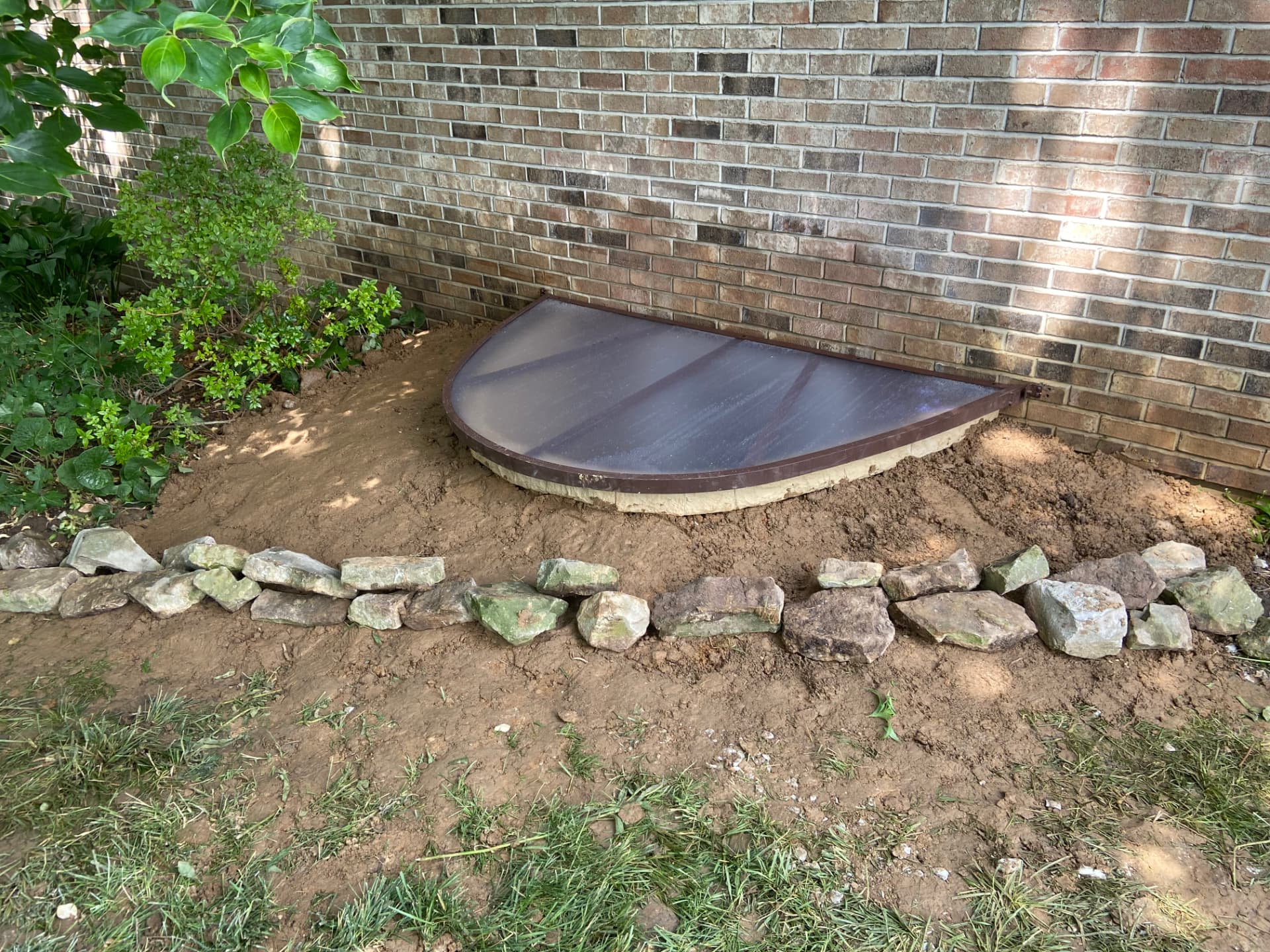
What actually decides whether an egress window holds up for the long haul? It's not the window itself. It's the drainage around it, the framing and materials that go into it, and the experience of whoever's doing the work.
We wrapped up a job last month that made that point again. A homeowner's basement had flooded this year, egress window and all. Once we got in there, it came down to poor drainage mixed with a handful of other issues, the kind of combination you see when whoever did the work hadn't done enough of these to know what to check for.
Short answer. An egress window holds up long term when three things go right. The drainage around the window well is planned for, not guessed at. The framing, header, and materials are sized and installed correctly. And whoever's doing the work has done enough of these to know what to look for. Skip any one of those and a legal bedroom can turn into a liability the first hard rain.
How We Handle the Water Question on Every Job
Every egress well needs somewhere for that water to go, and we handle it one of three ways depending on the house. First choice is a drain tile tie-in at the footing, if the home already has drain tile to tie into. For older homes that don't, we'll set a sump pit with a pump and a discharge line. A gravity drain sounds simple and works great on paper, but it only works if the yard actually has enough drop to it, so it's rare that one qualifies.
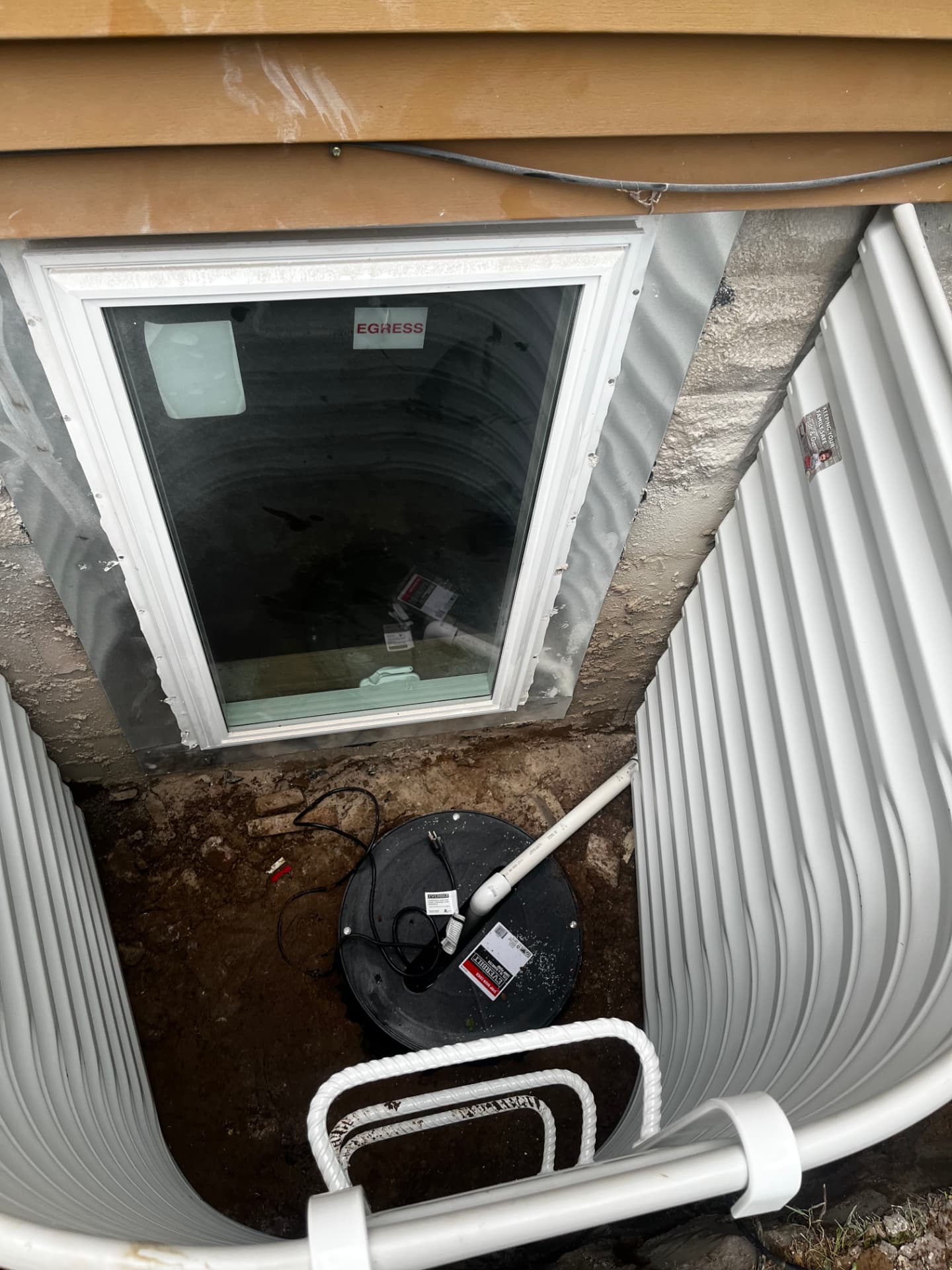
We assess the site before we ever cut into the foundation, and we'll tell a homeowner exactly what we see. What we won't do is promise to fix every gutter, downspout, or grading issue on the property. We're not a drainage company. We're the ones who'll tell you the well is only as good as what's happening around it, and then we build it right. Rock backfill around the well isn't optional on our jobs either. Skip it and freeze-thaw will eventually pop the well loose.
The Framing, Header, and Materials Part
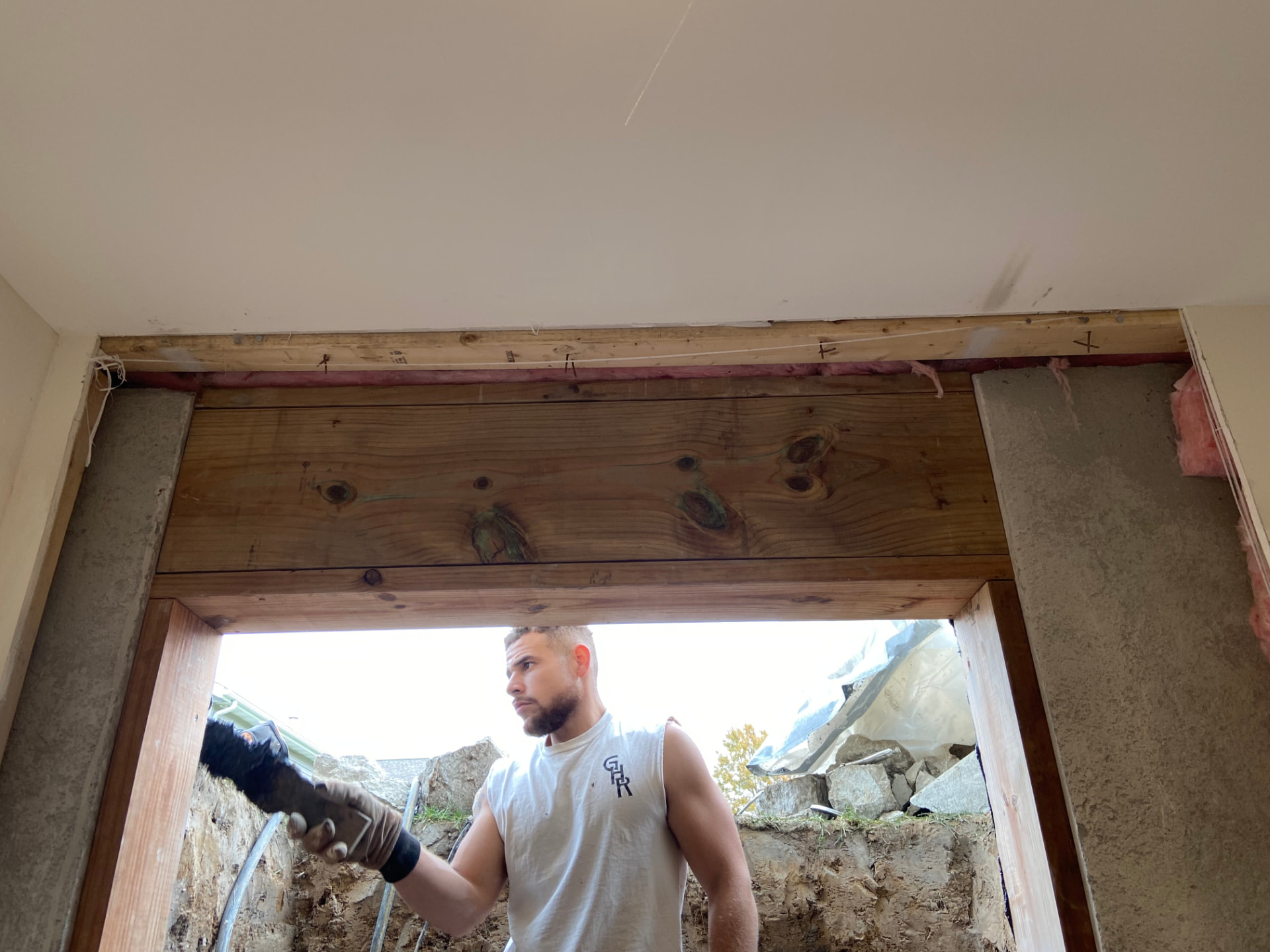
This is the part that's easy to take for granted because it's invisible once the drywall's back up. Every opening needs a header sized for that specific span and load, not a standard size pulled off a chart without looking at the house. The window and well materials matter too. We run white steel or tan Rockstep fiberglass wells depending on the look and the site. None of that is complicated in theory. It's just easy to get wrong if you're not doing it often.
Why Experience Is the Real Safeguard
Here's the honest answer to why this matters. After 600-plus of these, you develop an eye for what a site is going to do before it does it. You know which downspout is going to be a problem in five years. You know when a header calculation is close enough on paper but wrong for that particular wall. That's not something a checklist teaches. It's something you build by doing the same specialized work over and over, on this side of the river and that one, in block foundations and poured ones and brick and the occasional oddball.
Getting Other Bids
I don't worry about it when someone wants to get other bids on a job like this. I welcome it. It's your foundation. If you do, ask each company the same three questions. How do you handle drainage around the well. How do you size the header, and what materials do you use. How many of these have you actually done.
The answers will tell you more than the price does.
Frequently Asked Questions
What's the biggest reason an egress window fails after it's installed?
Almost always drainage. The window and the well can be installed correctly and still take on water if nothing around them was planned for where that water goes once it rains.
What should I ask before hiring anyone for an egress window?
How they handle drainage around the well, how they size the header and what materials they use, and how many of these they've actually installed. Those three answers matter more than the price.
How long before a poorly installed egress window actually shows a problem?
Sometimes a year, sometimes two. Drainage and framing issues rarely show up on day one. They show up the first time conditions actually test them, usually a hard rain.
That's really the whole thing. A legal, lasting egress window comes down to drainage, framing and materials, and experience, done right every time. That's the standard we hold every job to, on both sides of the river.
Tim Grotefendt, Founder, GHR Egress Windows, Edwardsville, Illinois. Serving the St. Louis Metro, both sides of the river.